


Claims Administration Intelligence Report 2026
The latest trends reshaping claims administration across Europe
For organisations managing complex claims programmes, the operating environment is changing rapidly.
Rising claim severity, climate volatility, evolving regulation, fraud risk, and increasing stakeholder expectations are reshaping how claims programmes are managed, governed, and measured.
The Claims Administration Intelligence Report 2026 explores the trends, risks, and operational shifts defining the future of claims administration across Europe and the UK.
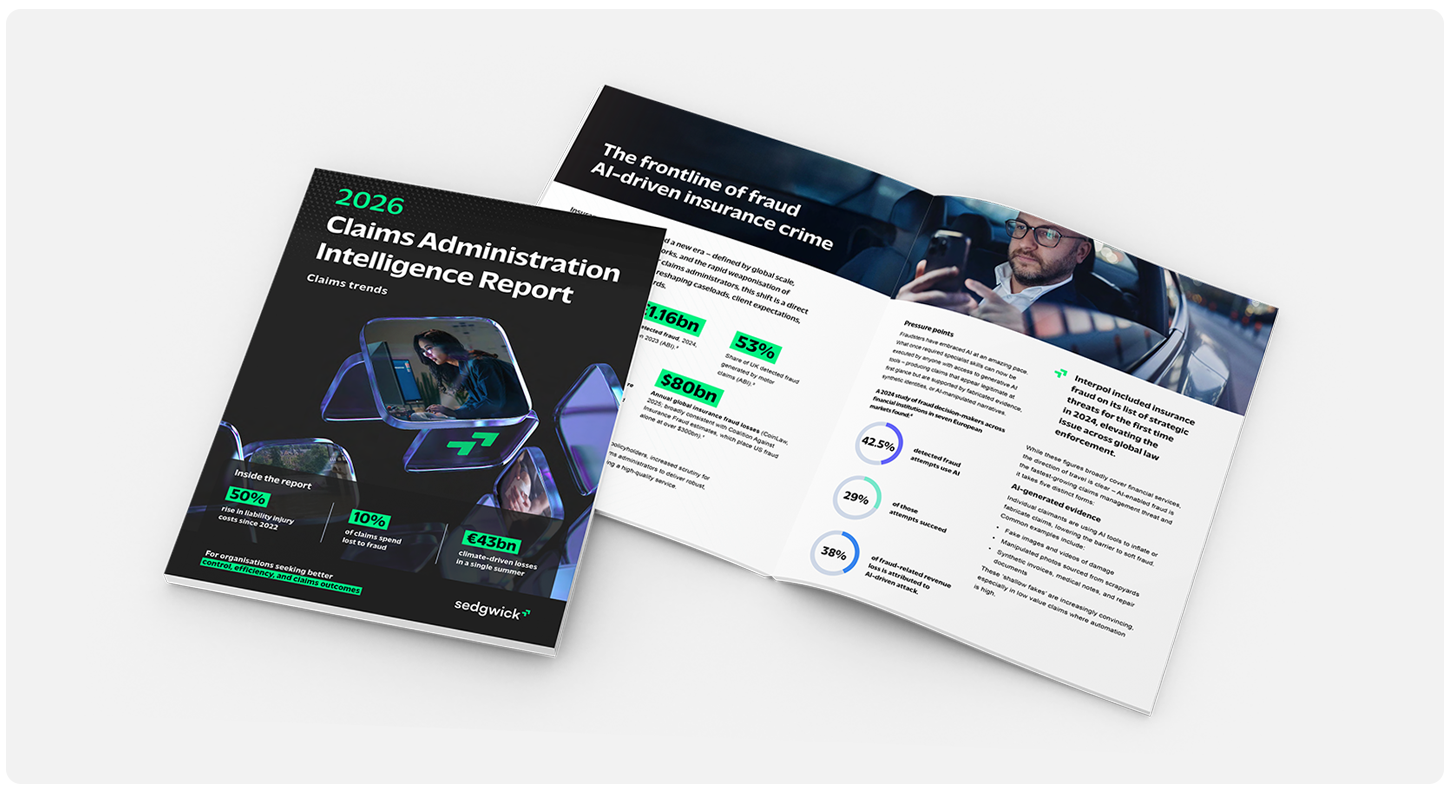
Chapter 1: Claims Trends
What’s inside
Drawing on general market statistics and Sedgwick sourced claims data – 2.3 million losses received, Europe-wide, from 2020 to date – this report examines in depth the pressure points in claims administration, market evolution, and the wider implications for large organisations managing complex, high-value programmes.
Explore some of the trends impacting claims:
- 01
- Why claim severity – not frequency – is now the biggest cost driver across liability, motor, property, and bodily injury claims.
- 02
- How climate volatility, AI-enabled fraud, and rising litigation complexity are increasing operational and financial pressure on organisations.
- 03
- What evolving regulation, governance expectations, and outsourcing standards mean for claims administration in 2026 and beyond.
- 04
- How leading organisations are using data, intelligent automation, and specialist expertise to improve claims outcomes while protecting customer trust.
Coming soon
Further chapters will explore:
- Legislation and regulation – current and future impact on claim governance, including TPA provider operating standards
- Industry sector specifics spanning affinity, utilities, transportation and motor, telecoms

In an increasingly complex liability claims landscape, the need for specialist TPA expertise has never been clearer. Large corporate organisations are turning to strategic partners to streamline and enhance the claims management process, so they can stay focused on what they do best.