
AstraZeneca
The absence of product recalls is not the absence of exposure.
In the pharmaceutical sector, product performance is the foundation of trust, but it is not what ultimately defines reputation. That moment comes when quality is called into question.
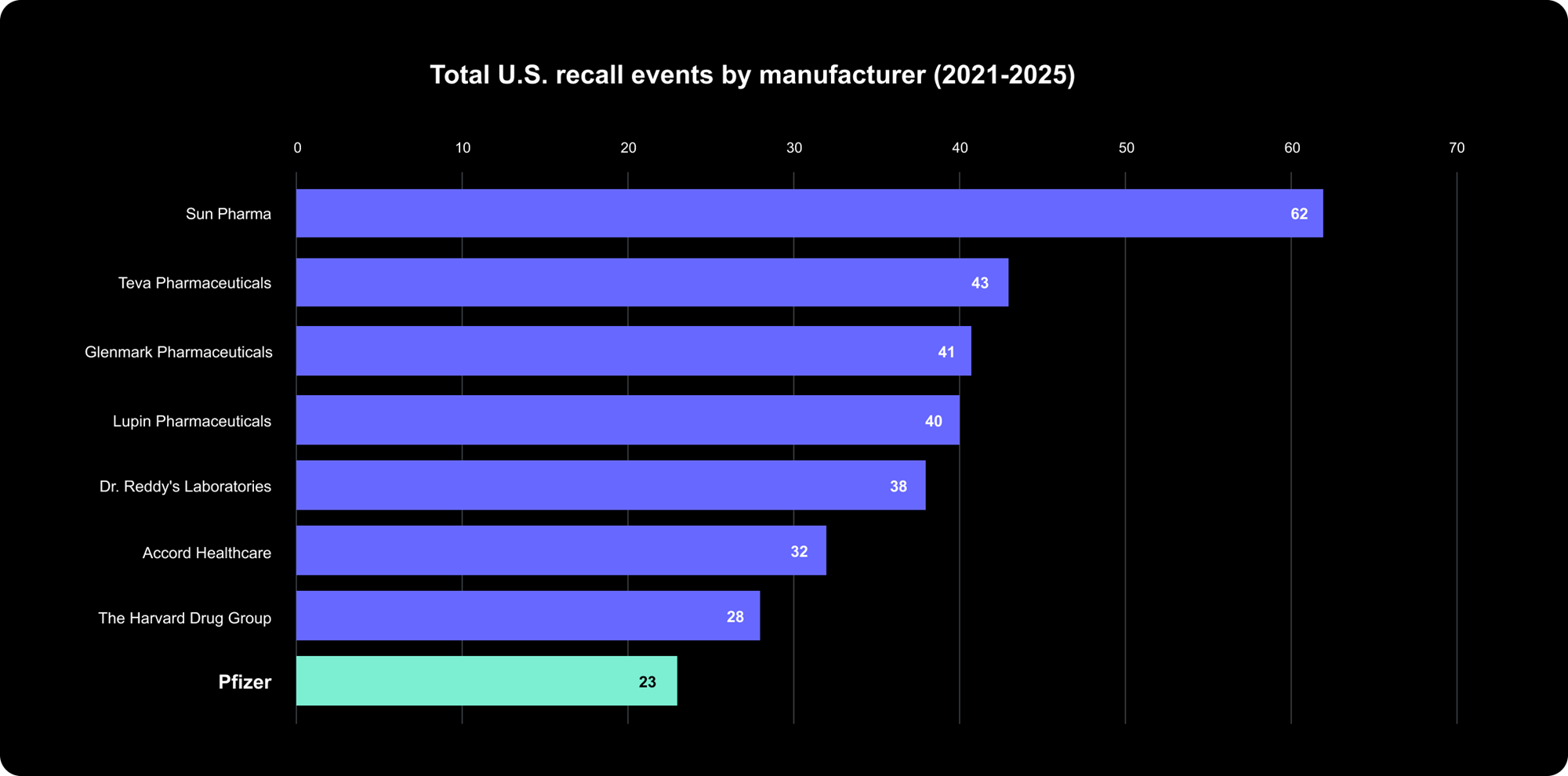
AstraZeneca’s five-year period without a U.S. recall reflects strong operational discipline. However, it should not be mistaken for the absence of risk. Product safety events remain an inherent reality of the industry, capable of emerging without warning and attracting immediate scrutiny from regulators, healthcare professionals, and patients alike.
In these moments, your response defines the brand.
Rising recall activity. Escalating consequences.
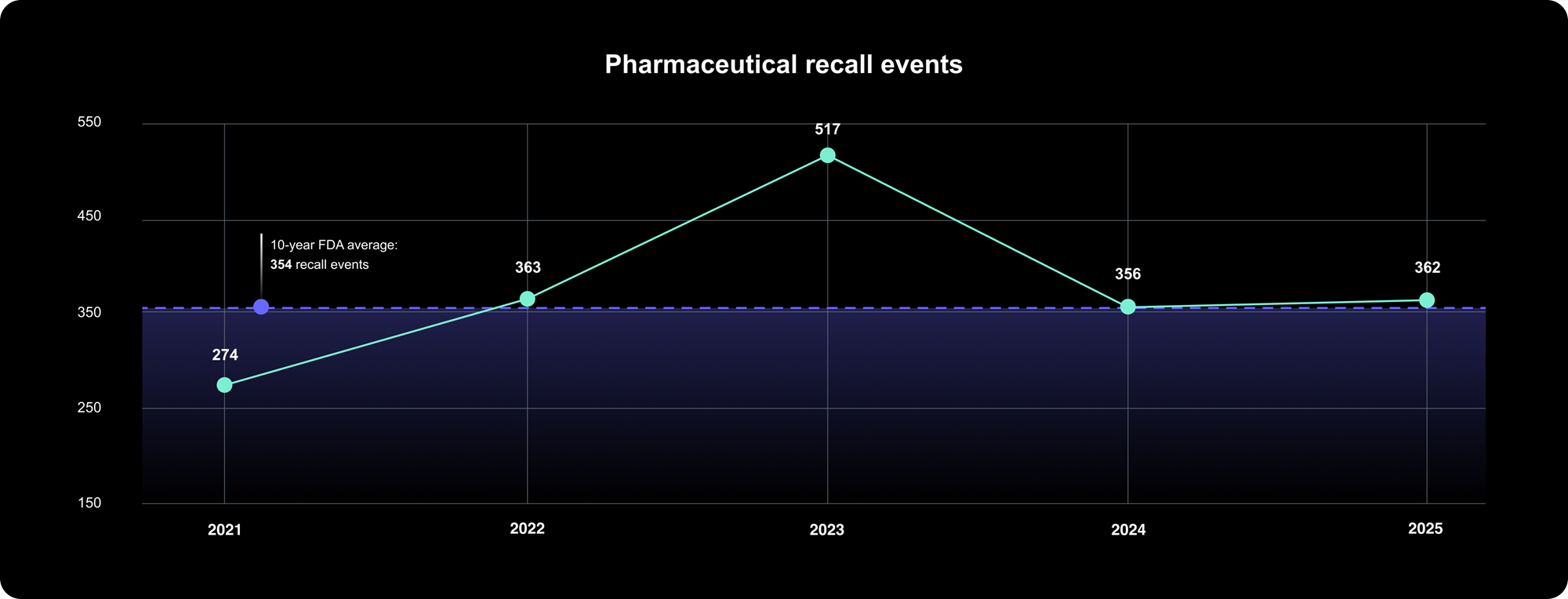
Product recall activity across the U.S. pharmaceutical sector has remained consistently elevated over the past five years. While annual volumes have fluctuated, the broader trend points to a sustained level of industry exposure rather than a temporary increase.
For AstraZeneca, this environment warrants continued vigilance. Regulatory scrutiny is intensifying as the FDA and policymakers explore expanded authority over recall processes and enforcement. Expectations for speed, transparency, governance, and stakeholder communication continue to rise.
The result is a more demanding operating environment where AstraZeneca will be judged not only by the quality of your products, but by the effectiveness of your response when issues emerge.
The anomalous spike in 2023 was driven by a single, exceptional sterility incident identified through FDA inspection at a manufacturing facility – resulting in nearly 100 events. Excluding this outlier it reveals a more instructive reality: recall activity persists at scale, year after year, rather than fluctuating over time.
A broader risk landscape facing AstraZeneca.
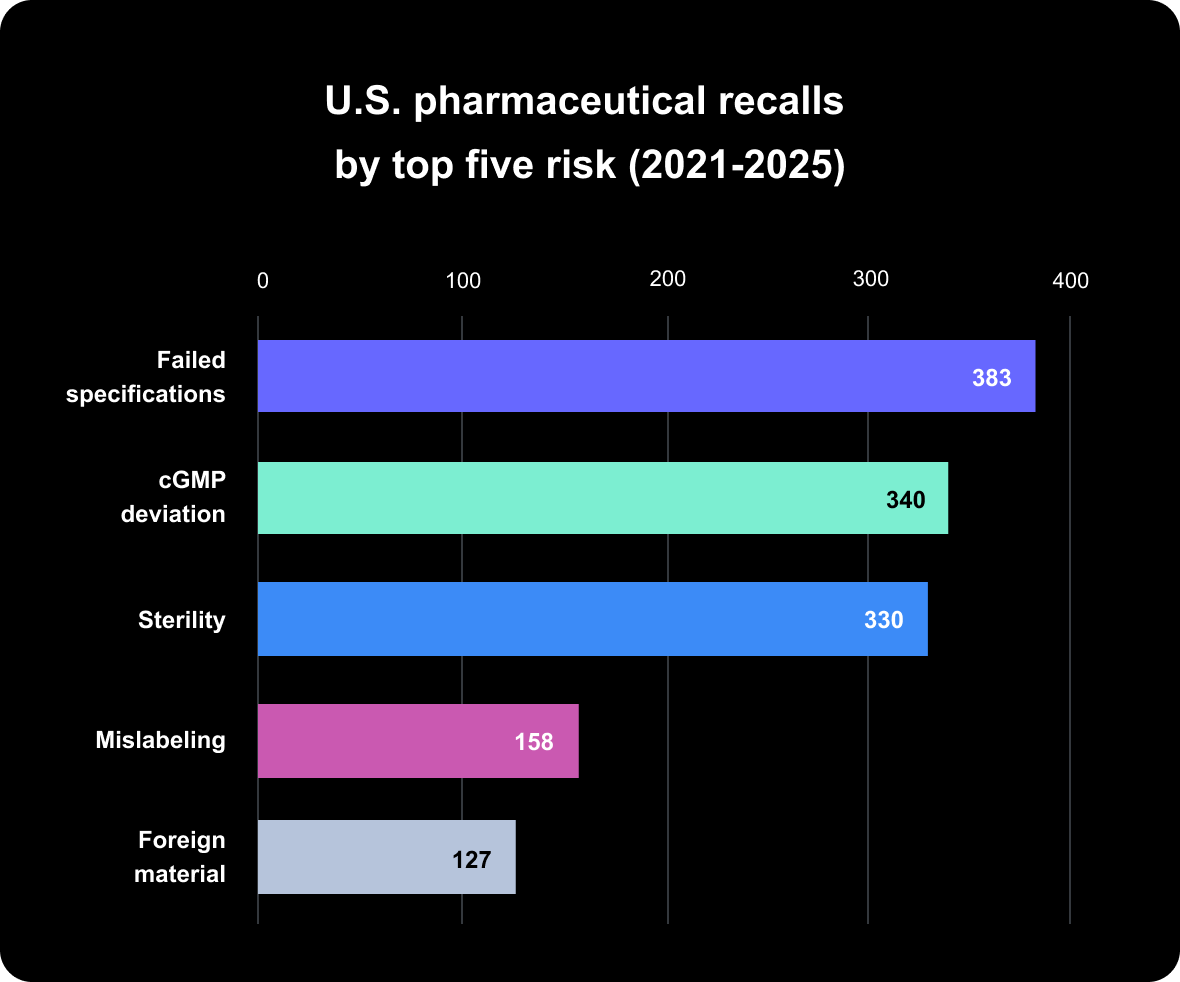
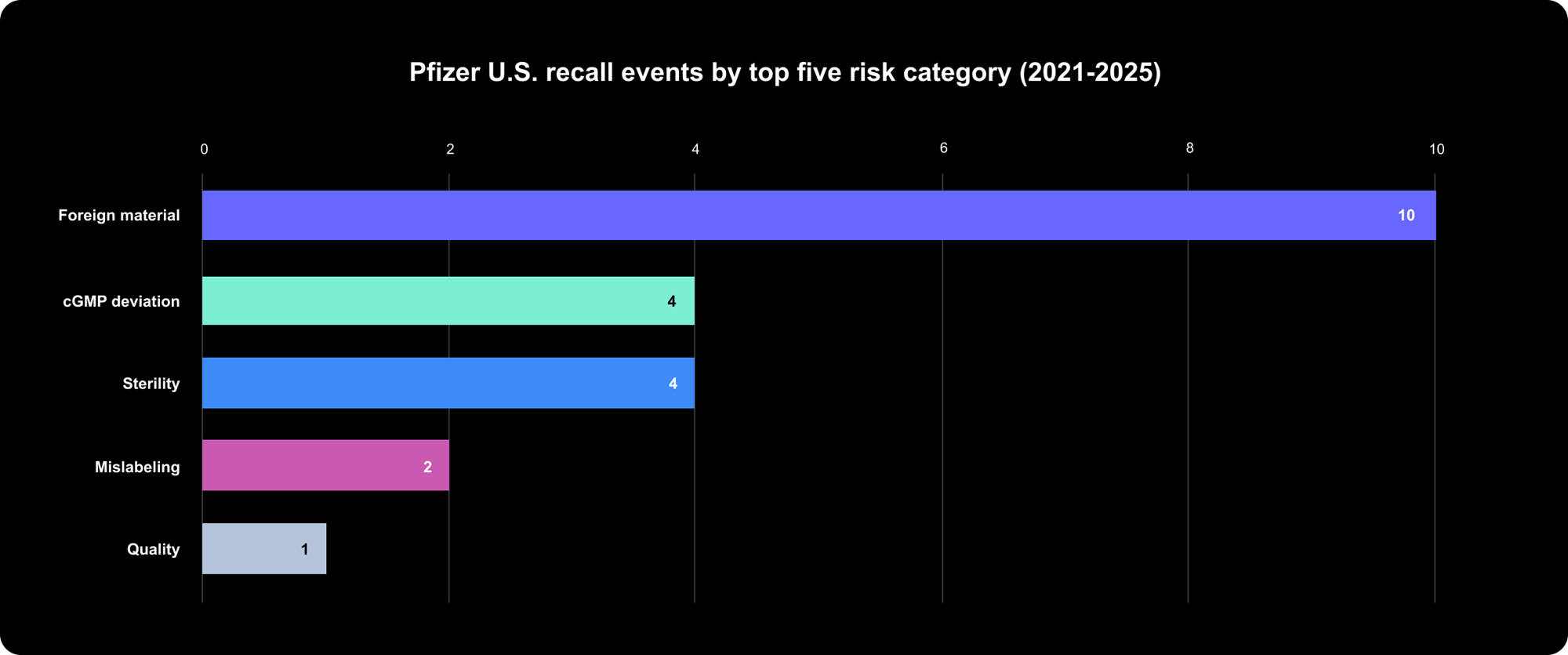
Pharmaceutical recalls are rarely driven by a single point of failure, they emerge across a wide range of factors, creating a persistent state of exposure. This breadth is not new. What has changed is the frequency with which these risks continue to surface and the speed at which organizations must respond when they do.
For AstraZeneca, the significance lies not in predicting which category may trigger a future event, but in maintaining readiness across the full spectrum of potential scenarios.
In this context, the defining question is not whether AstraZeneca will face future recall events, but how effectively the organization can respond when it matters most.
What AstraZeneca’s five-year recall record signals.
AstraZeneca has not experienced a U.S. FDA recall in five years. While this reflects a sustained period of operational stability, a ten-year analysis of 939 pharmaceutical manufacturers reveals an important pattern: the longer the period of recall dormancy, the higher the average level of recall activity once events resume.
Manufacturers returning to recall activity after one to two years of dormancy experience an average of 1.39 recalls in the subsequent year. For those emerging from seven or more years without a recall, that figure increases to 1.85 – a rise of one-third.
For AstraZeneca, this offers an important perspective. Historical stability is a valuable indicator of performance, but a limited predictor of future exposure. As periods between events lengthen, maintaining recall readiness becomes no less important than managing recalls themselves.
What follows stability matters most for AstraZeneca.
While organizations returning from prolonged periods of dormancy typically experience higher levels of subsequent recall activity, they also appear more likely to experience larger-scale events. Across the ten-year analysis, manufacturers emerging from seven or more years without a recall are 65% more likely to initiate an event impacting more than one million units than organizations that remained actively engaged in recall activity.
For AstraZeneca, this adds an important dimension to the risk profile. Extended periods of stability may increase the distance between recall events, but they do not necessarily reduce the potential impact when events occur.
In this context, preparedness is not simply about maintaining compliance. It is about ensuring AstraZeneca can respond effectively to high-consequence events capable of attracting significant regulatory scrutiny, operational disruption, and stakeholder attention.
The FDA expects recall readiness before it is needed
The FDA’s guidance, Initiation of Voluntary Recalls Under 21 CFR Part 7, Subpart C, is founded on a simple premise: manufacturers should be prepared to execute a recall before a product safety issue emerges.
To support this objective, the agency encourages organizations to maintain trained recall teams, robust distribution records, established communication procedures, and, where appropriate, conduct exercises that validate recall readiness.
For AstraZeneca, this reinforces an important reality. Recall readiness is not measured when an event occurs. It is established during the periods of stability that precede it. As the FDA’s expectations continue to focus on speed, control, and effectiveness, the organizations best positioned to manage future events are often those that have spent the greatest time preparing for them.

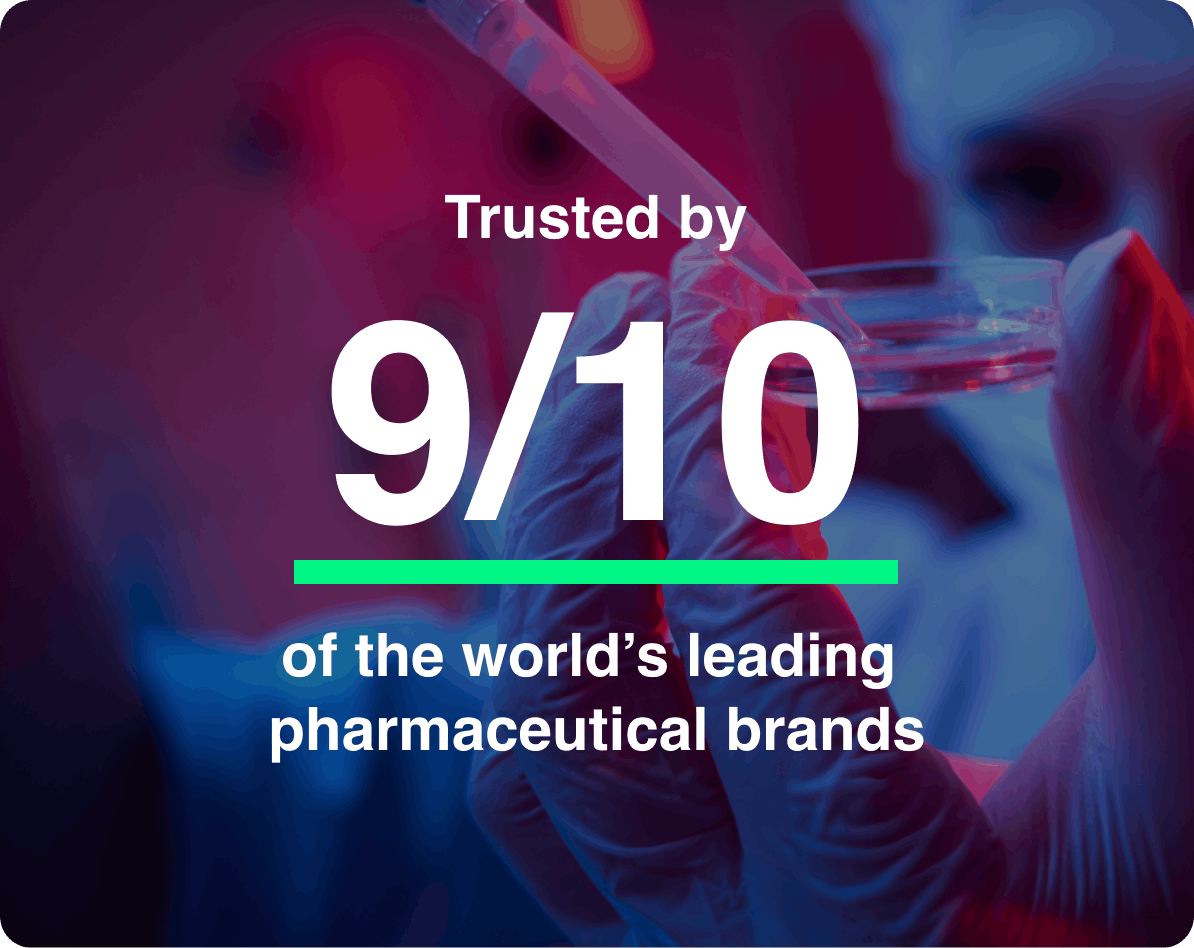
Protecting the pharmaceutical industry for 30+ years.

Pharmaceutical manufacturers operate in an environment of increasing complexity, global supply interdependence and heightened regulatory scrutiny, where product safety, precision and traceability must be delivered with absolute consistency.
Since 1995, Sedgwick has supported leading pharmaceutical companies through periods of heightened recall exposure — scaling patient and clinician engagement, strengthening regulatory compliance and safeguarding trust when it matters most.
From the first notification through to event close-out, we execute recalls with proven systems designed to minimize disruptions, protect operations, and strengthen brand integrity.
Proven recall leadership:
- Global delivery at scale: 150+ countries and 50+ languages supported
- Depth of experience: 8,000+ recall and remediation programs successfully managed
- Proven market impact: 500M+ products safely removed from the market worldwide
- Established heritage: 30+ years of disciplined, regulator-aligned recall leadership
When a nationwide controlled substance recall triggered immediate regulatory and operational pressure
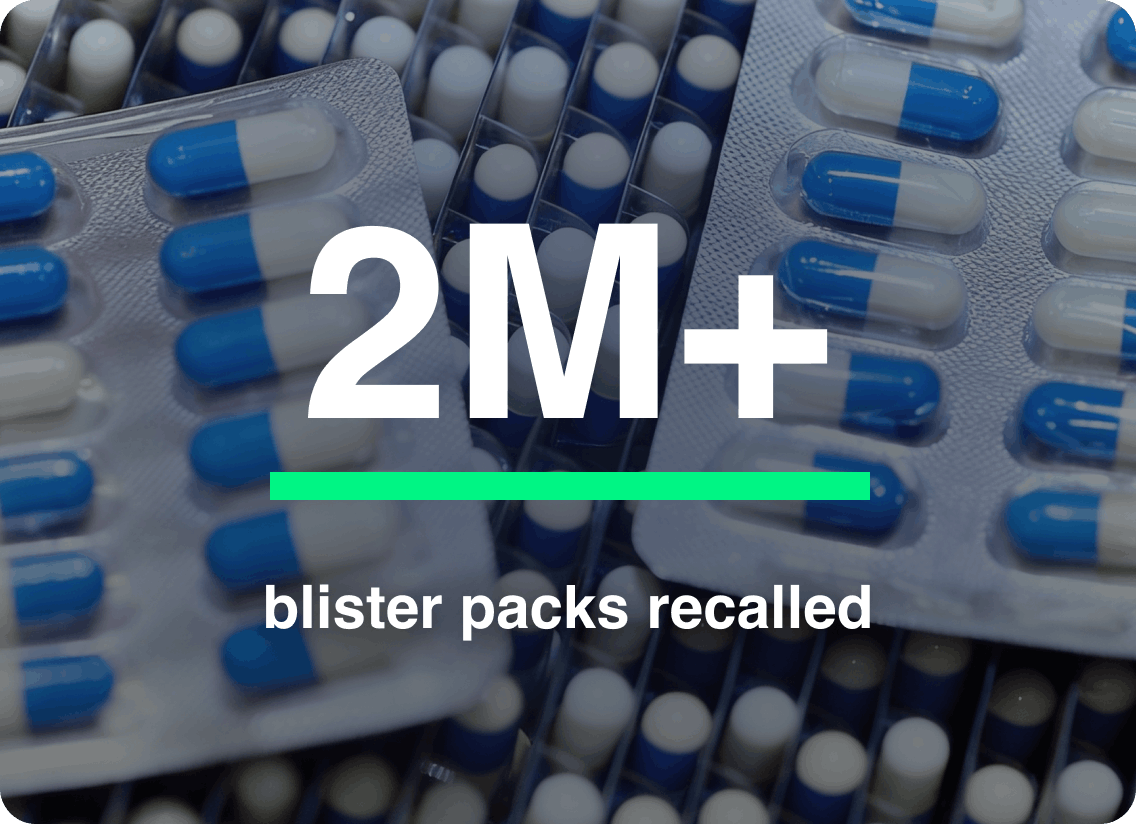
A recall involving 2 million Lorazepam blister packs rapidly escalated into a high-pressure regulatory event.
Following assay and impurity concerns, urgent action was required across pharmacies and healthcare providers nationwide. As a Schedule IV controlled substance, the recall demanded strict FDA and DEA compliance, detailed reconciliation and secure chain-of-custody controls.
Operational complexity intensified further as the recall expanded from 74 direct accounts to more than 2,200 downstream consignees, while product data had to be captured at the individual blister pack level.
Recognizing the scale and scrutiny of the event, the manufacturer engaged Sedgwick Recall to help restore control and support compliant execution.
Solution

The result
A conversation, when it’s useful
Every recall is different, but the pressures medical device manufacturers face are remarkably consistent. If you are considering how AstraZeneca would manage stakeholder communication, operational surge, global logistics and regulatory expectations during a high-visibility event, a short conversation can help clarify what recall readiness looks like in practice.
When the time is right, we’re here. Request an introductory conversation with Ryan.

Ryan Gooley
Director of Business Development
Ryan brings more than 20 years of experience supporting medical device manufacturers through recalls, field corrective actions, and post-market product safety events. Having advised on more than 1,500 recalls, withdrawals, and market corrections, he helps organizations navigate situations when patient safety, compliance, and continuity of supply are at risk.
He has led large-scale remediation programs involving devices used across clinical and consumer healthcare settings, supporting time-sensitive recovery, replacement, and stakeholder communication efforts. Ryan works with organizations to strengthen recall readiness and response strategies in alignment with evolving FDA expectations and post-market obligations.
His expertise spans recall execution, operational coordination, and crisis management, helping organizations mitigate exposure, maintain continuity, and preserve confidence among regulators, providers, and patients.
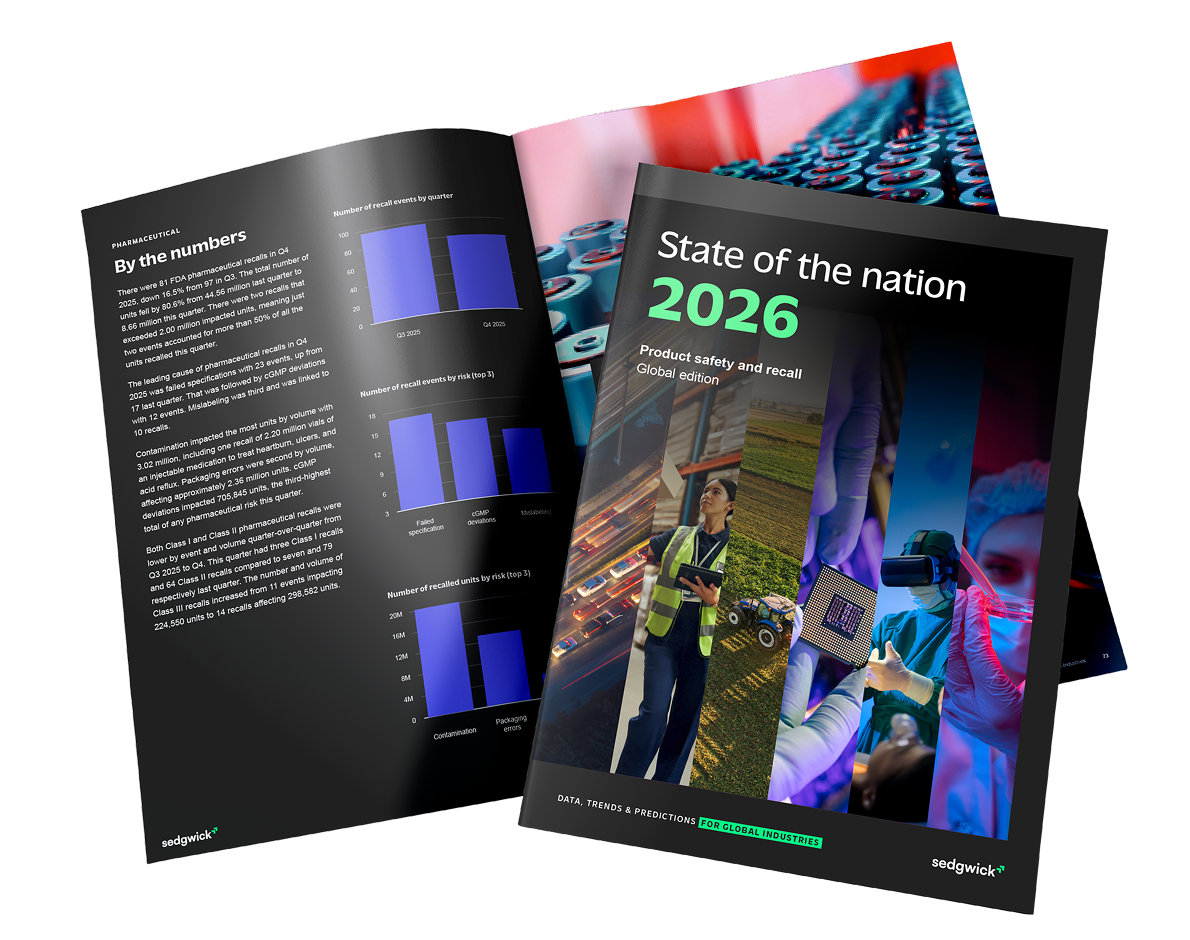
Get deeper insights with our Recall Index
For more than a decade, Sedgwick’s Recall Index report has set the benchmark for product safety intelligence — combining rigorous data analysis with an unbiased perspective on the emerging trends shaping the pharmaceutical risk landscape.
The latest edition examines the regulatory scrutiny, post-market realities and operational pressures influencing drug safety and recall activity, offering essential insight into how risk is evolving in 2026.
Download your copy now and discover why the Recall Index is trusted by pharmaceutical safety and risk leaders in more than 100 countries.