 Australia
  Canada
  Denmark
  France
  Ireland
  Netherlands
  New Zealand
  Spain and Portugal
  United Kingdom
  United States
Global risk: navigating instability and building resilience
Persistent instability is now the hallmark of global risk in 2026. Organizations face relentless volatility from geopolitical
upheaval, economic uncertainty, cyber threats, accelerating AI risks and supply chain disruption — often all at once.
Risk exposure is rising faster than preparedness, demanding a shift toward agile scenario planning and practical, staged interventions.
Cyber and AI risks are evolving at breakneck speed, driving new investments in risk management and innovation. Disruption from regulatory changes, trade policies and global events is widespread, impacting cost, quality and operational resilience across both public and private sectors.
Looking ahead, success will belong to organizations that balance bold risk management with fresh thinking and continuous progress in order to strengthen cyber and supply chain resilience and embrace adaptive, scenario-based strategies.
This section explores the trends, challenges and strategies shaping how organizations respond — and who will set the pace in a world where disruption is constant.
Global risk outlook: cyber leads claims growth
Geopolitical instability, cyber threats and AI constitute the top tier of global risks for the next 12–24 months. However, a striking disconnect emerges: While climate change drives substantial insured losses, only 5% of organizations cite it as a top global risk, revealing a significant perception gap between actual exposure and executive attention. Cyber stands out as the wildcard for claims mix: 47% expect cyberattacks to drive the largest increase in claims — far exceeding natural disasters (9%) and supply/trade disruptions (27%).
Readiness gap: rising risk, middling preparation
3%
Fully prepared
Complete readiness for global risks
91%
Mostly/moderately ready
Adequate but incomplete preparation
59%
Increased exposure
Risk rose versus prior year
Preparedness reality
Only 3% of organizations consider themselves fully prepared for major global risks, while 91% rate their readiness as “mostly” or “moderately” prepared. This middling confidence comes amid rising exposure: 59% report that their global risk exposure increased compared to the previous year.
The gap between rising risk and moderate preparedness creates appetite for scenario testing, table-top exercises, and cross-functional war games that connect coverage decisions to claims operations. Organizations are seeking practical, staged interventions rather than comprehensive overhauls.
Open-ended responses reinforce quantitative findings: geopolitics, cybersecurity, tariffs, and supply chain dominate as underestimated risks, indicating strong alignment between structured assessment and executive intuition.
Industry specific risk profiles
Risk exposure and maturity vary significantly across sectors, requiring tailored approaches to governance, supply chain resilience and workforce management.
Financial services and technology
Leads AI governance maturity with highest committee adoption (79% in finance). Technology balances committees with automated tools but faces elevated immigration-related labor strain. Both sectors prioritize cybersecurity in supply chain risk management.
Manufacturing and industrial
Most exposed to geopolitics and supplier risk, with 83% reporting negative trade policy impact. Strong annual catastrophe assessment cadence. Relies more heavily on external consultants (26%) for AI risk management. Supply concentration creates vulnerability.
Retail and consumer goods
Shows more reactive AI posture (12% vs 6% overall). Higher sensitivity to weather and climate factors in supply-chain planning. Trade policy impact second highest at 78%. Lags in governance committee formation relative to finance and tech.
Hospitality and healthcare
Hospitality reports highest moderate immigration-related labor hindrance. Healthcare experiences mostly slight but widespread labor access impacts. Both sectors face acute mental health and burnout safety factors given frontline workforce composition.
Professional and business services
Conducts most frequent catastrophe assessments (twice-yearly). Shows least negative trade-policy impact. Demonstrates mature risk monitoring but faces leadership skill transfer challenges, similar to other sectors.
Facing the litigation surge
Litigation is no longer an emerging issue — it’s one of the most significant risks impacting our industry today.
With claims severity climbing and legal complexity deepening, the cost implications are enormous. Tort reform remains elusive, and uncertainty across jurisdictions only amplifies exposure.
2026 is the year to act. Organizations must treat litigation as a top-tier risk driver and implement proactive strategies to mitigate its impact on financial outcomes and overall risk management. Waiting is not an option — the stakes are too high.

Sedgwick leader perspective
Change isn’t coming – it’s here.
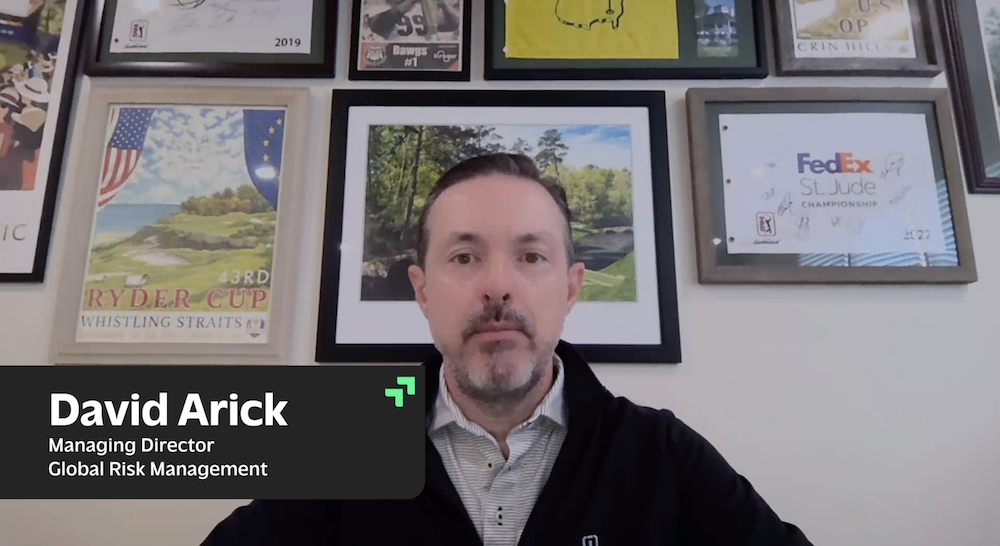
Persistent instability — driven by geopolitical volatility, economic uncertainty, cyber threats, AI risks and supply chain disruption — is redefining the global risk landscape in 2026. At Sedgwick, we believe the future will belong to organizations willing to embrace proactive scenario planning, deploy practical solutions and balance rigorous risk management with relentless innovation. For us, it’s about building true resilience: we empower clients to adapt quickly, seize opportunity in disruption and lead with confidence in a world where change is the only constant.

In a world where volatility is the new normal, resilience means more than just reacting. It’s about anticipating what’s next — no matter what comes our way.”
— Dave Arick, Managing Director, Global Risk Management
01
Instability is the new reality. Agility is the only answer.
Geopolitical volatility, economic uncertainty and rapid shifts in global markets are creating persistent instability. Organizations must expect disruption and build agility into every aspect of their operations.
02
Cyber and AI risks are accelerating beyond prediction.
Cyber threats and AI-driven disruption are evolving faster than most organizations can prepare for. The risk landscape is changing daily, demanding new investments in both risk management and innovation.
03
Talent and workforce shifts are reshaping the risk equation.
Aging workforces, changing employee expectations and the need for new skills are amplifying vulnerabilities. Succession planning, upskilling and holistic talent strategies are now critical to resilience.
04
Scenario planning and practical interventions distinguish leaders from followers.
Most organizations are only moderately prepared for what’s ahead. Success will depend on proactive scenario planning, staged interventions and the ability to adapt rapidly to the unexpected.

“Cyber threats: It’s a matter of when, not if.”
— Sarah Ryan, Chief Strategy Officer